Digital vs. Traditional Locks for HDB Flats: Which Is Better in 2026?
We see the aftermath of lock choices constantly during our emergency call-outs across Singapore.
Homeowners locked out of their properties often wish they had a different setup, prompting the common question: Digital vs. Traditional Locks for HDB Flats: Which Is Better in 2026? An increasing number of HDB flats are transitioning from standard keyed mortises to sleek biometric systems.
Data from 2026 shows that upgrading to keyless entry solves many common access problems. This shift makes perfect sense for busy families and commercial businesses that require clear access logs.
Our team of certified locksmiths in Singapore will break down the true differences between these two options. You will see the latest compliance data, evaluate the security implications, and get a clear roadmap for your next door upgrade.
Understanding the Two Lock Types
Traditional Mechanical Locks
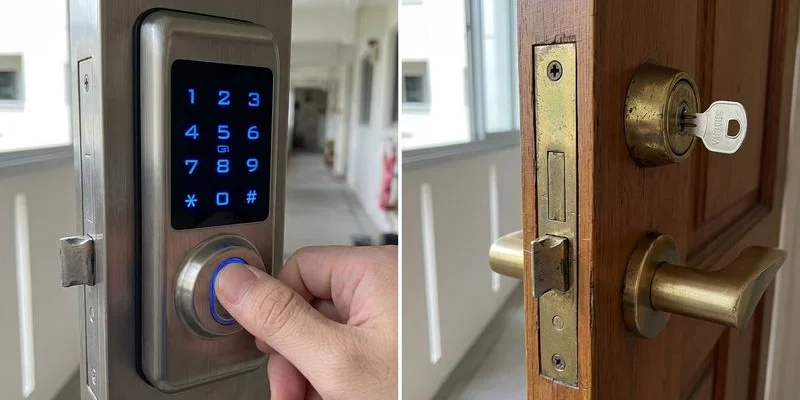
Traditional locks for HDB flats typically fall into two categories. Mechanical systems have been the standard for decades because they require no power source and remain incredibly simple to operate.
- Mortise locks: The standard lock fitted into the edge of the door, operated with a physical key. This setup is exactly what most HDB flats come with from the developer, fitting perfectly into the standard 43mm thick non-fire rated door.
- Deadbolts: A supplementary lock that throws a solid metal bolt into the door frame for added security.
We often encounter these setups during commercial lockouts, where heavy-duty brands like Abloy or Mul-T-Lock provide exceptional resistance to picking. Mechanical wear or a jammed cylinder are the only common failure points you have to worry about.
Modern Digital Locks
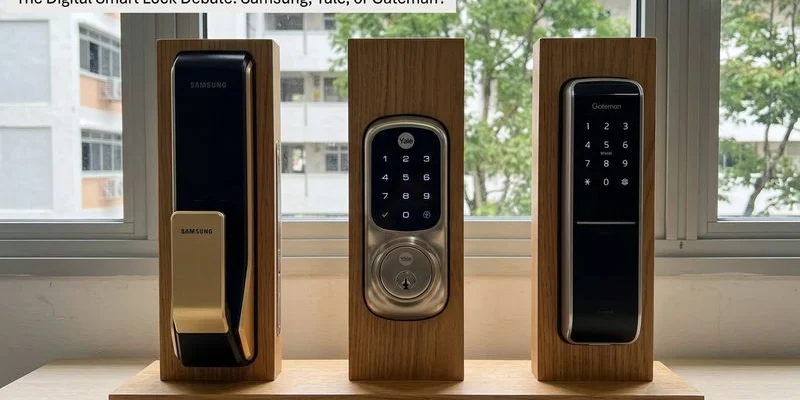
Digital locks replace the traditional key mechanism with electronic access methods. These modern devices offer varying levels of convenience and technology.
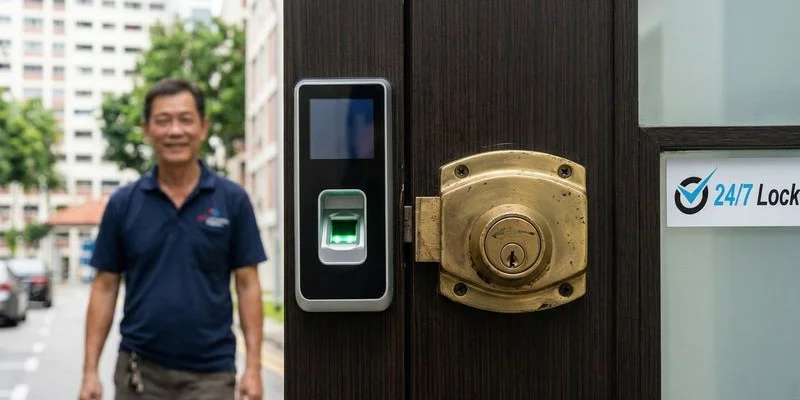
- Fingerprint recognition: A biometric scanner reads your fingerprint. Modern 2026 semiconductor sensors handle wet or dirty fingers much better than older optical versions.
- PIN code entry: Enter a numeric code on an illuminated keypad.
- RFID cards: Tap a registered card or key fob against the reader.
- Bluetooth and WiFi: Unlock the door directly from a smartphone app.
- Combination models: Most modern units offer two or more of these access methods for maximum flexibility.
Our technicians install hundreds of these smart devices every year. High-end units now frequently feature IP65 weather resistance, which protects the sensitive internal electronics from Singapore’s notorious humidity and tropical rain.
The Pros and Cons Compared
Daily Convenience
Digital systems win decisively in the convenience category. You never need to carry physical keys, search through a crowded bag, or worry about losing access.
Our emergency call-out data reveals that physical key loss is a primary driver for people switching to smart locks. For families with children, elderly parents, or domestic helpers, digital entry completely eliminates the need to cut multiple spare keys.
“A quick fingerprint scan or PIN entry is an absolute lifesaver when your hands are full of heavy groceries.”
Revoking access is equally simple because you can just delete a user profile or change the active code. Traditional options require physical keys for every single person who needs access.
We advise clients that lost mechanical keys often necessitate a complete cylinder change for security reasons. Smart models completely remove this specific vulnerability and ongoing expense.
Security and Compliance
Security levels are much closer than most people initially assume. Digital devices offer several proactive features that mechanical versions simply cannot match.
- Auto-lock functions: The door secures itself automatically after closing, eliminating constant anxiety.
- Break-in alarms: Many models sound a loud siren if someone tries to force the mechanism open.
- Anti-peep PIN entry: You can press random numbers before and after your real code to prevent shoulder-surfing.
- Access logs: You can see exactly who entered and when, a tracking feature highly valued by commercial businesses.
Our installation team strictly adheres to the latest Singapore Civil Defence Force (SCDF) regulations regarding fire safety. Any smart device installed on a fire-rated door must now possess a Certificate of Conformity (CoC) under SS 332 or EN 1634-1 standards.
Budget electronic units may actually be less secure than a quality mechanical deadbolt. A mid-range to premium smart model is generally more secure than a standard HDB mortise lock.
System Reliability
Traditional hardware holds a distinct advantage when evaluating pure reliability. A mechanical deadbolt has no batteries, no complex circuit boards, and no software to update.
We handle plenty of lockout situations caused by depleted batteries or electronic glitches. Digital units generally run on four to eight AA alkaline batteries (like Energizer or Duracell), which last roughly six to ten months in our tropical climate.
To maximize the lifespan of your electronic unit, industry experts recommend a few best practices:
- Replace all AA batteries simultaneously every six months.
- Inspect the battery compartment for corrosion caused by Singapore’s high humidity.
- Keep emergency 9V batteries handy outside the house for backup power.
Moisture and high temperatures can severely impact battery performance over time. If you ignore the low-battery warnings, you could find yourself stuck outside. Read our guide on what to do when locked out of a digital lock for immediate troubleshooting steps.
Most quality smart models include a physical emergency key override or a 9V battery terminal. You can still gain entry even if the primary electronics fail completely.
HDB Door Compatibility
Both types of locks work perfectly well, but you must check your door specifications first. Standard HDB main doors typically measure between 40mm and 45mm thick, which accommodates most electronic units on the market.
Our digital lock installation team handles the fitting for all major flat types across the island. There are a few critical compatibility factors to review before making a purchase.
- Existing mortise cutouts: Many new models can use the exact same hole left by a standard mechanical mortise.
- Fire rating compliance: HDB fire-rated doors (typically 45mm thick) must not be drilled or modified without professional guidance to preserve their official SCDF certification.
- Gate lock integration: The HDB iron gate operates independently, meaning you can upgrade the main door while keeping a standard padlock on the gate.
Cost Comparison over 10 Years
The total cost of ownership for a biometric system is noticeably higher over a ten-year period. Many homeowners and commercial property managers consider the advanced convenience features well worth the premium.
| Expense Factor | Traditional Mechanical Lock | Modern Digital Lock |
|---|---|---|
| Initial purchase | S$50 to S$200 | S$250 to S$1,500 |
| Professional installation | S$30 to S$80 | S$50 to S$150 |
| Annual maintenance | Minimal (occasional lubrication) | S$10/year (Quality AA batteries) |
| Key replacement | S$5 to S$15 per physical key | Free (add new PIN or fingerprint) |
| Hardware replacement | S$80 to S$200 (every 10 years) | S$300 to S$1,000 (every 7-10 years) |
We highly recommend reviewing these long-term expenses before making a final decision. For detailed pricing breakdowns, see our locksmith cost guide.
Digital vs. Traditional Locks for HDB Flats: Which Is Better in 2026?
Choose a Traditional Lock If:
Sometimes the classic mechanical approach remains the most logical choice for specific situations.
- You prefer total simplicity and zero reliance on batteries.
- Your budget is strictly limited and physical security is your only priority.
- You are renting the flat and do not want to invest in expensive hardware.
- You want the most reliable option that requires virtually no maintenance.
Choose a Digital Lock If:
Smart technology provides unmatched practical benefits for busy households and property managers.
- You frequently forget or lose your physical keys.
- Multiple family members or staff require independent access schedules.
- You want auto-lock functionality for complete peace of mind.
- You need detailed access logs to monitor who enters the premises.
Our Professional Recommendation
We believe a mid-range biometric model with fingerprint and PIN access offers the best value for most HDB homeowners in 2026. Standard 40-45mm doors easily accommodate these sleek devices without massive modifications.
Our team regularly recommends top-tier brands based on their current performance and reliability statistics:
- Samsung: Known for sleek designs and seamless smartphone app integration.
- Yale: Offers solid mortise mechanisms heavily trusted by commercial businesses.
- Philips: Features excellent IP-rated weather resistance for exposed corridors.
Drivers needing emergency car unlocking or homeowners facing a jammed door know that reliable hardware is absolutely crucial. Deciding between Digital vs. Traditional Locks for HDB Flats: Which Is Better in 2026? comes down to your household activity levels and budget. A certified, fire-rated smart system provides essential reliability while adding immense daily convenience.
Our specialists can assess your door and recommend the perfect fit. Call us at tel:+6582432440 for a free consultation, or read our brand comparison guide to narrow down your choices today.
Need Locksmith Help?
Our team is available 24/7 for emergency lockouts and lock services across Singapore.
WhatsApp +65 8243 2440